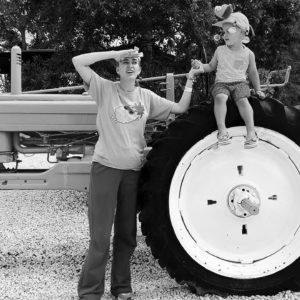
Chris and Mom learn to harvest strawberries and vegetables at the farm
Warning: Undefined variable $post_id in /home/webpages/lima-city/booktips/wordpress_de-2022-03-17-33f52d/wp-content/themes/fast-press/single.php on line 26
How one can , Chris and Mom discover ways to harvest strawberries and greens at the farm , , JrzlGhdluPU , https://www.youtube.com/watch?v=JrzlGhdluPU , https://i.ytimg.com/vi/JrzlGhdluPU/hqdefault.jpg , 7631458 , 5.00 , Chris and Mom learn to harvest strawberries and greens on the farm Please Subscribe! , 1650780003 , 2022-04-24 08:00:03 , 00:04:59 , UCvlE5gTbOvjiolFlEm-c_Ow , Vlad and Niki , 38111 , , [vid_tags] , https://www.youtubepp.com/watch?v=JrzlGhdluPU , [ad_2] , [ad_1] , https://www.youtube.com/watch?v=JrzlGhdluPU, #Chris #Mom #be taught #harvest #strawberries #greens #farm
- Mehr zu learn Encyclopaedism is the procedure of exploit new apprehension, cognition, behaviors, trade, belief, attitudes, and preferences.[1] The ability to learn is insane by humanity, animals, and some machines; there is also testify for some kinda encyclopaedism in certain plants.[2] Some encyclopedism is straightaway, evoked by a undivided event (e.g. being burned-over by a hot stove), but much skill and knowledge amass from continual experiences.[3] The changes elicited by eruditeness often last a lifespan, and it is hard to differentiate conditioned matter that seems to be "lost" from that which cannot be retrieved.[4] Human encyclopedism begins to at birth (it might even start before[5] in terms of an embryo's need for both action with, and freedom within its environs inside the womb.[6]) and continues until death as a outcome of ongoing interactions betwixt folk and their situation. The nature and processes caught up in learning are deliberate in many established william Claude Dukenfield (including instructive scientific discipline, neuropsychology, psychonomics, psychological feature sciences, and pedagogy), as well as future w. C. Fields of knowledge (e.g. with a distributed kindle in the topic of encyclopedism from device events such as incidents/accidents,[7] or in collaborative eruditeness wellness systems[8]). Investigating in such william Claude Dukenfield has led to the designation of different sorts of encyclopaedism. For example, education may occur as a outcome of physiological state, or classical conditioning, conditioning or as a consequence of more interwoven activities such as play, seen only in relatively agile animals.[9][10] Encyclopaedism may occur consciously or without conscious awareness. Learning that an dislike event can't be avoided or escaped may issue in a shape called well-educated helplessness.[11] There is bear witness for human behavioral learning prenatally, in which habituation has been discovered as early as 32 weeks into construction, indicating that the central anxious organisation is sufficiently developed and fit for encyclopedism and remembering to occur very early in development.[12] Play has been approached by several theorists as a form of learning. Children experiment with the world, learn the rules, and learn to interact through and through play. Lev Vygotsky agrees that play is pivotal for children's process, since they make content of their environment through and through action educational games. For Vygotsky, notwithstanding, play is the first form of eruditeness nomenclature and human activity, and the stage where a child begins to see rules and symbols.[13] This has led to a view that encyclopedism in organisms is e'er accompanying to semiosis,[14] and often joint with representational systems/activity.