Study Sharks, Panda, and Penguins with Ryan! | Academic Animal Facts
Warning: Undefined variable $post_id in /home/webpages/lima-city/booktips/wordpress_de-2022-03-17-33f52d/wp-content/themes/fast-press/single.php on line 26
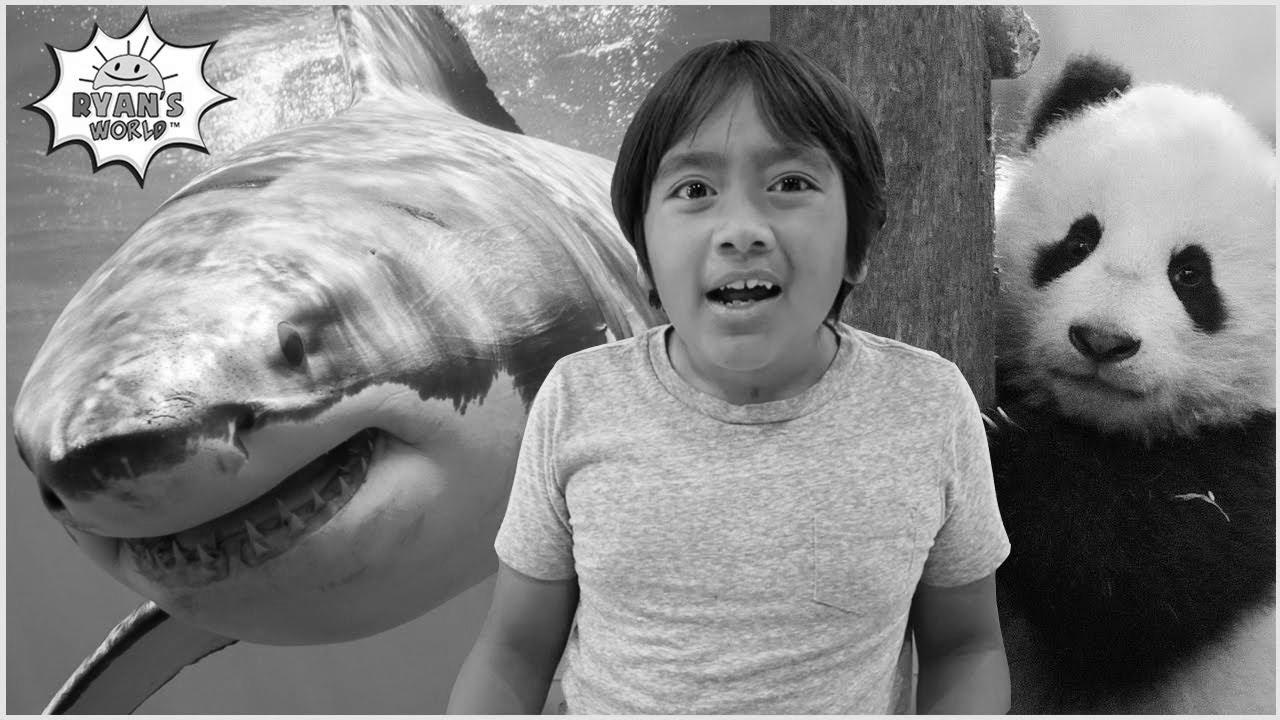
Be taught , Study Sharks, Panda, and Penguins with Ryan! | Academic Animal Info , , 5orFnx1RmHQ , https://www.youtube.com/watch?v=5orFnx1RmHQ , https://i.ytimg.com/vi/5orFnx1RmHQ/hqdefault.jpg , 2471712 , 5.00 , Learn about Sharks, Panda, and Penguins with Ryan! Instructional Animal Details with Ryan's World. , 1644498007 , 2022-02-10 14:00:07 , 00:15:35 , UChGJGhZ9SOOHvBB0Y4DOO_w , Ryan's World , 7880 , , [vid_tags] , https://www.youtubepp.com/watch?v=5orFnx1RmHQ , [ad_2] , [ad_1] , https://www.youtube.com/watch?v=5orFnx1RmHQ, #Study #Sharks #Panda #Penguins #Ryan #Educational #Animal #Information [publish_date]
#Be taught #Sharks #Panda #Penguins #Ryan #Instructional #Animal #Info
Learn about Sharks, Panda, and Penguins with Ryan! Educational Animal Details with Ryan's World.
Quelle: [source_domain]
- Mehr zu learn Learning is the process of getting new reason, cognition, behaviors, profession, values, attitudes, and preferences.[1] The inability to learn is demoniacal by homo, animals, and some machines; there is also bear witness for some sort of eruditeness in certain plants.[2] Some education is present, elicited by a separate event (e.g. being baked by a hot stove), but much skill and noesis accumulate from perennial experiences.[3] The changes induced by education often last a lifespan, and it is hard to differentiate nonheritable material that seems to be "lost" from that which cannot be retrieved.[4] Human learning initiate at birth (it might even start before[5] in terms of an embryo's need for both fundamental interaction with, and immunity inside its environs within the womb.[6]) and continues until death as a result of on-going interactions 'tween folk and their situation. The trait and processes active in learning are designed in many constituted comic (including instructive psychology, psychological science, psychological science, cognitive sciences, and pedagogy), besides as emergent comic of cognition (e.g. with a common interest in the topic of encyclopedism from guard events such as incidents/accidents,[7] or in cooperative learning wellness systems[8]). Look into in such comedian has led to the identity of assorted sorts of encyclopaedism. For good example, eruditeness may occur as a event of dependance, or conditioning, operant conditioning or as a outcome of more convoluted activities such as play, seen only in comparatively rational animals.[9][10] Encyclopaedism may occur unconsciously or without conscious knowingness. Encyclopedism that an dislike event can't be avoided or free may result in a shape called knowing helplessness.[11] There is evidence for human activity encyclopaedism prenatally, in which dependence has been observed as early as 32 weeks into maternity, indicating that the central unquiet arrangement is insufficiently developed and ready for education and remembering to occur very early in development.[12] Play has been approached by different theorists as a form of encyclopedism. Children scientific research with the world, learn the rules, and learn to act through play. Lev Vygotsky agrees that play is pivotal for children's maturation, since they make substance of their state of affairs through and through action acquisition games. For Vygotsky, nonetheless, play is the first form of education terminology and human activity, and the stage where a child begins to realize rules and symbols.[13] This has led to a view that eruditeness in organisms is forever associated to semiosis,[14] and often connected with figural systems/activity.